Walkthrough · 8–10 minute read
The visit, base to top — honestly
Written after roughly fifteen trips up over five years, in every season and most kinds of weather. This is the walkthrough I wish someone had handed me on my first evening in Toronto.
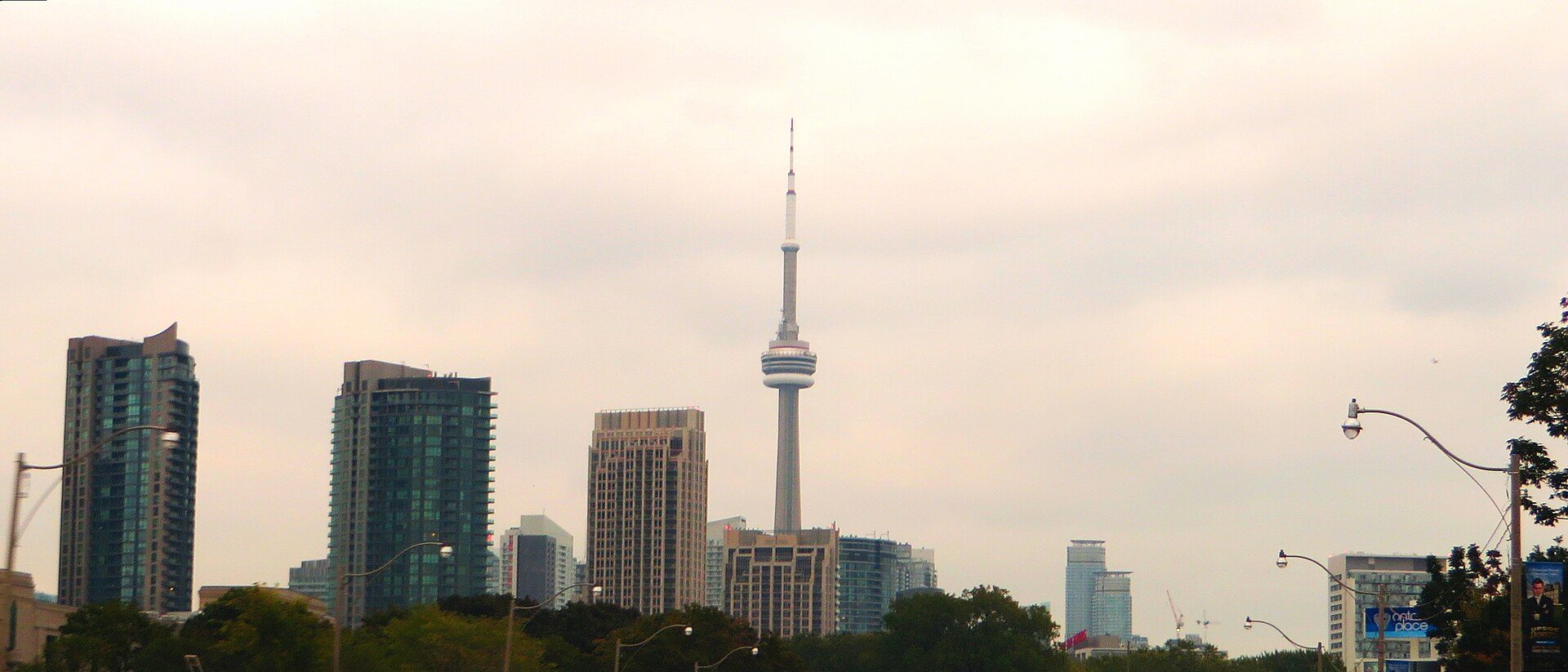
Arriving at the plaza
The base sits on the south side of Front Street, tucked in behind the railway lands. From Union Station it is a short walk south along York or Simcoe: cross the pedestrian bridge, drop down to Bremner, and the plaza is right there. In summer there will be buskers, families spilling out of the Aquarium next door, and a slow parade of tour groups. In February there will be about nine people, all in ski jackets. Give yourself five minutes at the plaza before you go anywhere. Look up. The scale is not obvious from the sidewalk on Front — it only lands when you stand under it.
Security and the queue
Entry is through a set of doors at the base of the pod. Bags go through an airport-style scanner, coats stay on, and the staff will politely but firmly point you toward whichever queue matches your ticket type. On a busy summer Saturday the queue can zigzag halfway across the lobby. On a Tuesday morning in November I have walked from the door to the elevator in under three minutes. There is nowhere useful to sit while you wait — do not carry more than you actually need.
The glass-fronted elevator (fifty-eight seconds)
The elevator is the moment everyone remembers. You board in a group of maybe fifteen, an attendant gives a friendly, slightly rehearsed introduction, and then the doors close. For the first few seconds you see only concrete slipping past the glass front — the inside of the shaft, close enough to touch. Then, quite abruptly, the concrete drops away and the whole car lifts free of the building. The city opens up under your feet. There is always a collective intake of breath at that moment. It is unfailing. The attendant pretends not to hear it. She has heard it thousands of times.
The whole ride is fifty-eight seconds. Do not fiddle with your phone; you will miss it. If you can, stand along the glass wall — the view lasts longer from there. My honest confession: I always feel it in my calves for the first ten seconds. It never quite goes away.
The main observation level
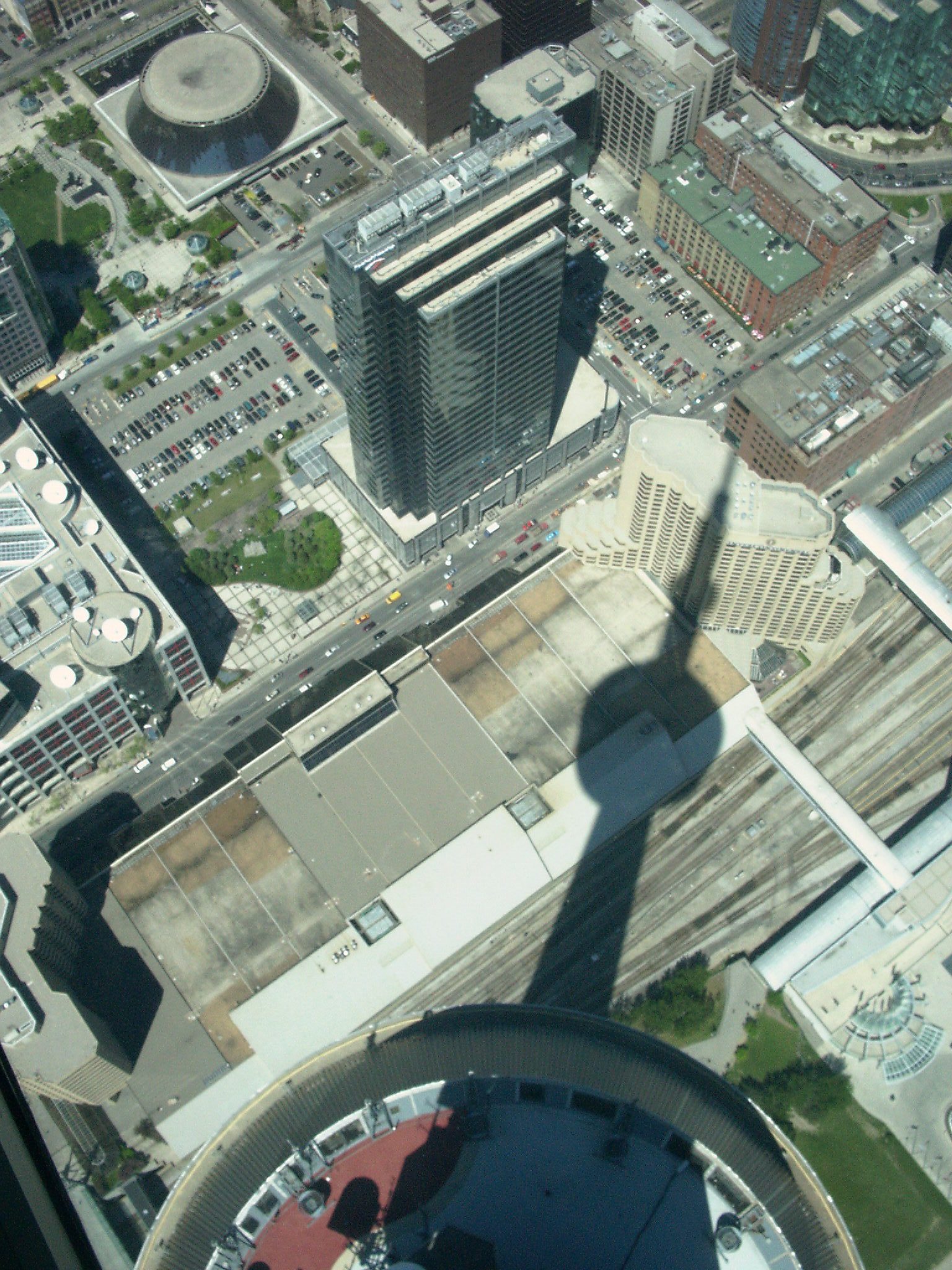
You exit onto a ring of glass. On a clear day the city is laid out like a well-drawn map: Front Street directly below, Union Station and its rail-fan of tracks to the north-east, the harbour and Toronto Island to the south, the skyline stacked shoulder to shoulder around you. On a cloudy day the whole thing turns into a slow, moving abstract painting — low weather sliding across the lake at eye level, gaps opening and closing over the neighbourhoods.
Walk the ring once slowly before you commit to a favourite window. The east side gets busy first because it catches the morning light on the financial district. The south side is where people linger longest — the lake and the island read like a diorama. The west side, over the railway lands, is the one I always come back to. That is where you see the way the tracks fan out under Bathurst and remember that this is fundamentally a railway city.
The glass floor
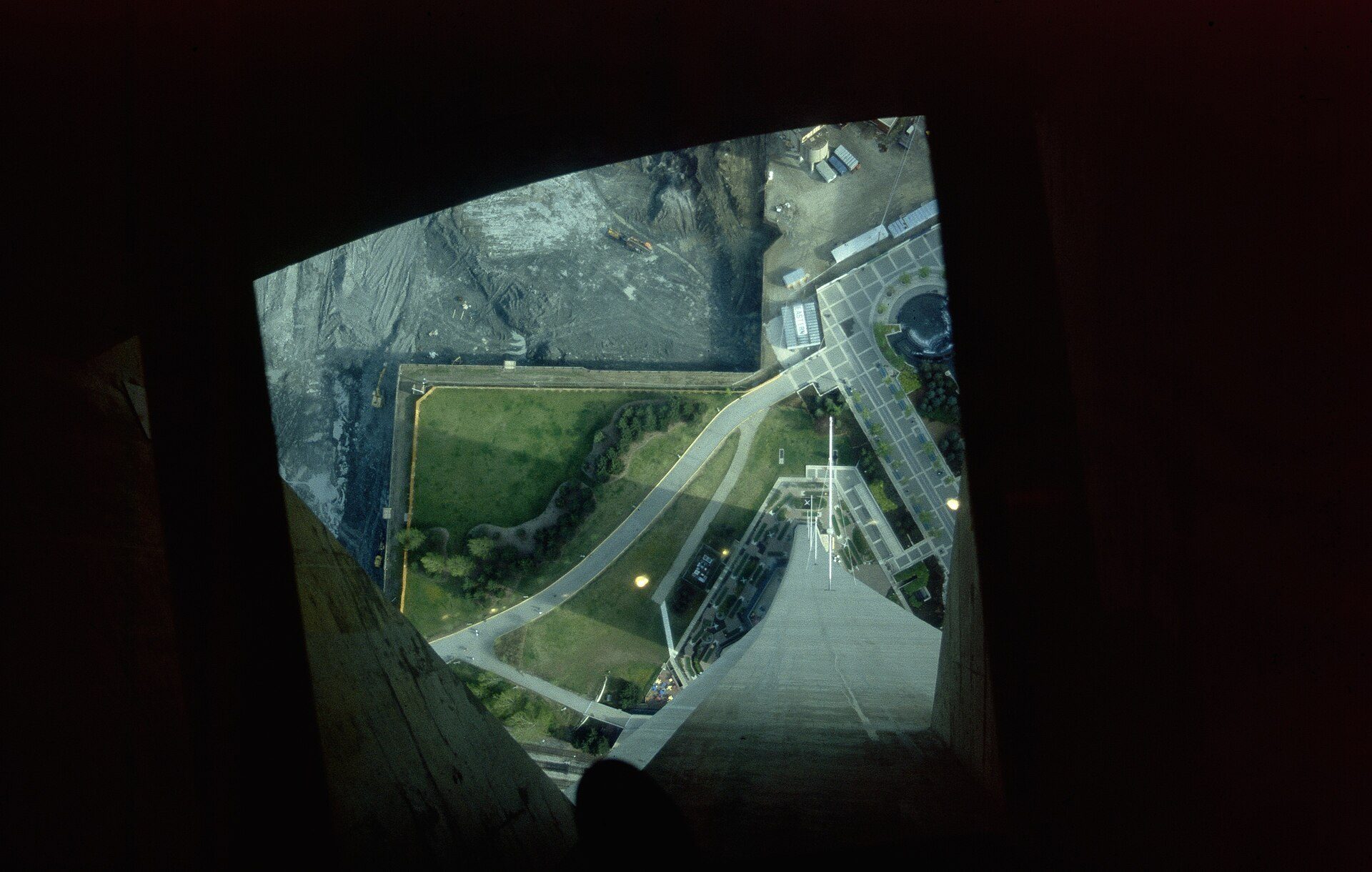
Here is the honest answer to the question everyone asks: yes, your knees will do a thing. That thing is normal. The floor is real, it has been tested to hold well over the weight of anyone who has ever walked across it, and small children treat it with a casual contempt that makes adults look ridiculous by contrast. I have watched five-year-olds bounce on it while their parents stood on the carpeted rim and clutched a railing.
Do not do it first. Do the north ring, look at the lake, buy a bottle of water, and then approach the glass. Step on. Wait for your body to remember that the building is not going anywhere. Take a photo of your shoes on top of a street that is 342 metres straight down. Then get off, because someone else is waiting and there is a small pleasant queue.
The outdoor terrace
There is a section of the main level where the wall opens out into a screened-in outdoor space. In summer this is glorious. In November it is a proper wind tunnel. The screen looks fine and is fine, but the height and the openness combine to produce a sound and a feeling that the enclosed side does not. This is where you actually understand that you are on the outside of a very tall building. Two minutes is enough. Five if you are photographing.
My one small warning: it will ruin any hairstyle that took effort. This is not the setting for the photograph you wanted for the profile update. Wait for the enclosed side for those.
The upper level
Higher up there is a smaller observation platform, thirty-three storeys further up. It is a separate ride, in a smaller elevator, and it is a very different experience — a compact circular room with narrow windows, less spacious, more focused. On a clear day you can honestly see for a very long way. On the day I first went up, the lake was low cloud from horizon to horizon and I could not see anything at all, and I still thought it was worth it.
My rule: if the weather looks like it will give you something interesting — a storm rolling in, a golden hour that lines up neatly — go up. If the day is entirely grey and closed-in, save it for the next visit. That is what the ticket rebooking policy is there for, and it is the operator’s job to explain it to you, not mine.
How long to budget
A comfortable visit is between an hour and a half and two hours. Under that and you are rushing the glass floor and skipping the terrace; over that and you are looping past the same window three times. If you are going up specifically to photograph, add another thirty minutes and pick a corner. If you have kids, budget the same time but expect it to be structured differently: a lot of glass-floor bouncing, a lot of pointing at boats.
Kids, strollers, and the gift shop
Children love the whole thing. Strollers are fine and there are elevators between the levels. The gift shop is at the exit and there is no way to leave without walking through it. This is my one operational complaint about the visit and I always mention it because it always mildly disappoints me. Fifteen visits in, I know exactly where the exit door is and I still get gently funnelled past the postcards. It is not a scandal, it is just a thing.
What to bring
A real coat in any month that is not July or August — even in summer the terrace is cool. A phone with more battery than you think; you will take more photographs than you expect. A refillable bottle of water; there are fountains upstairs. If you wear glasses, expect them to fog up when you go from indoors to the outdoor terrace on cold days. That is not a defect of your glasses; it is physics. I always carry a soft cloth for exactly this reason.
Next: how the view changes across the year · or the planning notes.