Field notes · 6–8 minute read
Seasons and light
Toronto is a lake city and a rail city, and both those facts get louder the higher you go. The view changes noticeably across the year — here is what fifteen visits have taught me about picking a season and a time of day.
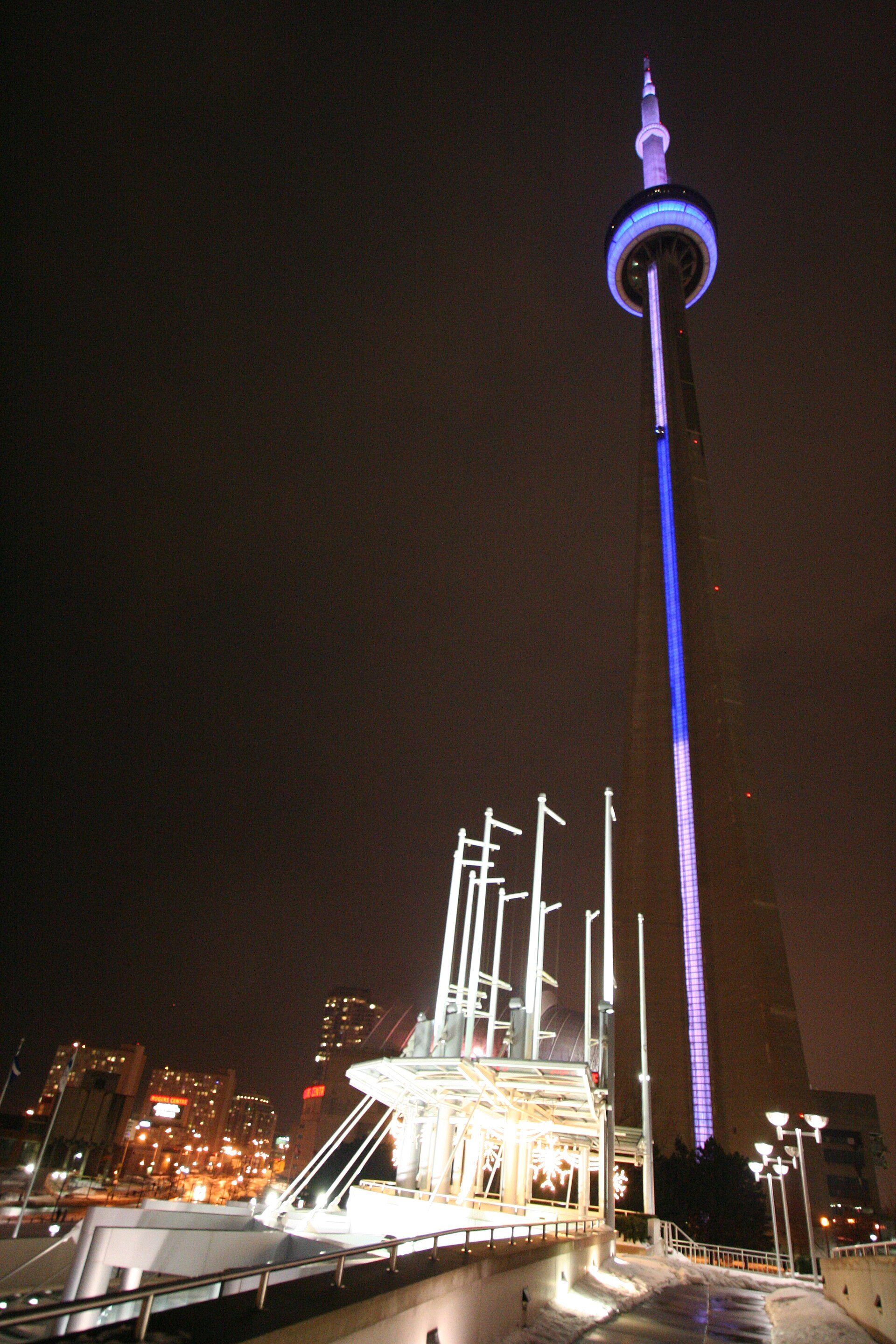
Winter — the honest window
January and February are, quietly, my favourite months to go up. The queues shrink to almost nothing. The light is a hard, low, blue-white that shows every seam in the harbour ice, every steam plume off a downtown roof, every roof panel of the SkyDome. On a proper cold morning the horizon can be uncanny — the escarpment across the lake so sharp it looks pasted on. You can genuinely see for a very long way.
The downside is honest too: the outdoor terrace becomes a small, ferocious wind tunnel, and the enclosed side windows sometimes carry a thin condensation halo where warm indoor air meets cold glass. Dress like you mean it. On the coldest days I have taken the tram down two stops and walked in through the PATH tunnels rather than face the plaza wind.
Best window: a bright weekday morning after a clear cold night. Aim to arrive around 09:30, ride up, and be back down by 11:00 before the school groups start.
Spring — haze and long afternoons
April through May is the season everyone underestimates. The lake ice has gone, the trees along Front Street are beginning, and the afternoon sun sits at a friendly angle over the harbour. The catch is that spring in Toronto is often hazy — humidity rising off the lake, low pollution sitting flat over the city, the far side of the harbour softening into a wash of grey-blue rather than resolving into detail.
This is not a bad thing. Haze is a great flattener. On a hazy spring afternoon the skyline reads as a series of stacked cardboard cutouts, one darker than the next, and the whole thing looks like a mid-century architectural drawing. It photographs beautifully in black and white. Do not go up hoping to count the buildings in Hamilton across the lake; go up hoping the atmosphere will do something with the city.
Best window: a Wednesday or Thursday around 15:30, in early May, after the trees have committed to green but before the summer humidity really settles in.
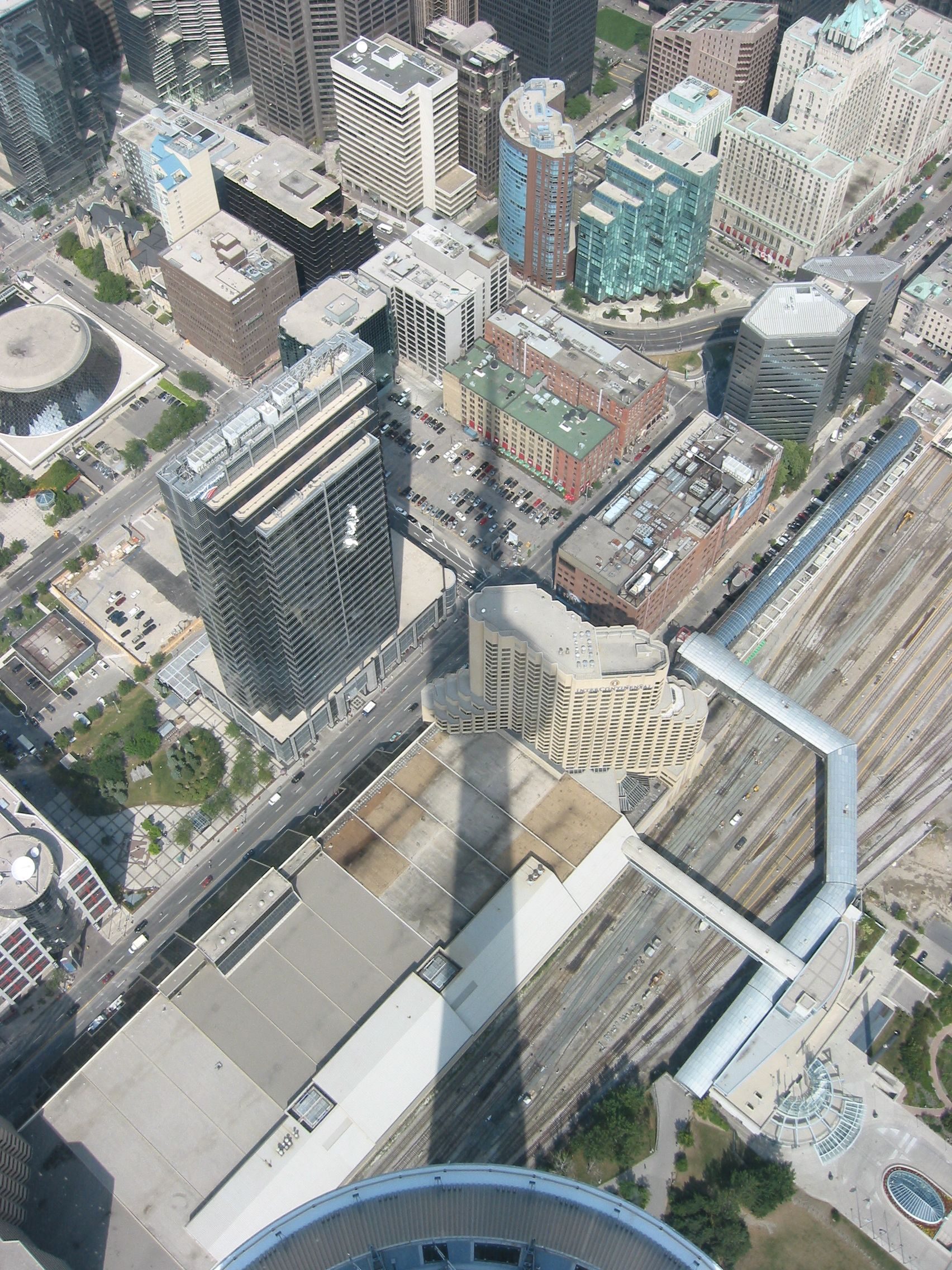
Summer — the long sunset
Summer is when Toronto is at its most photogenic and most crowded. Sunsets in late June and July run late — a proper 21:00 to 21:20 golden hour, then a long slow blue hour that hangs on until well after 22:00. This is the reason to make peace with the queue.
My routine: buy an evening slot, arrive about ninety minutes before sunset, do the full circuit slowly, be at a west-facing window by twenty minutes before the sun drops. Then, when the golden hour ends, walk east. The city itself starts to light up as fast as the sky turns blue. Union Station glows first, then the financial district block by block, and finally the little detail lights out along the piers.
My one warning: heat. On a genuinely hot day the enclosed observation level is comfortable, but the outdoor terrace can be surprisingly warm from mid-afternoon on. Bring water. Do not wear anything you cannot layer down out of.
Autumn — storms and clarity
September and October are the wild-card season and, when they work, they are the best days of the year to be up there. A proper autumn storm rolling in off the lake — low black cloud, a curtain of rain hanging under it, gusts strong enough that you can feel a hint of movement in the upper level — is an unforgettable thing to watch from behind a large piece of glass. I have stood at a north-east window and watched a squall line march across the tracks toward Union with the kind of quiet awe you normally reserve for landscapes that are not partly made of concrete.
The catch is that autumn is unpredictable. Some Tuesdays are dull, low, uniformly grey, and there is nothing to see at all. On those days I go home. The operator’s rebook policy exists precisely because of this month. Read it before you go.
Best window: watch the weather. Book a flexible ticket. Chase a system, not a date.
Next: planning — getting there, timing, and neighbours · or read the full walk-through.